

If AI Knows Everything, Why Learn Anything?

For all of human history, knowledge was hard to get.
If you wanted to learn from an expert, you had to find one. Then you had to convince them to teach you. Books helped. Universities helped. Libraries helped. But, expertise remained relatively scarce.
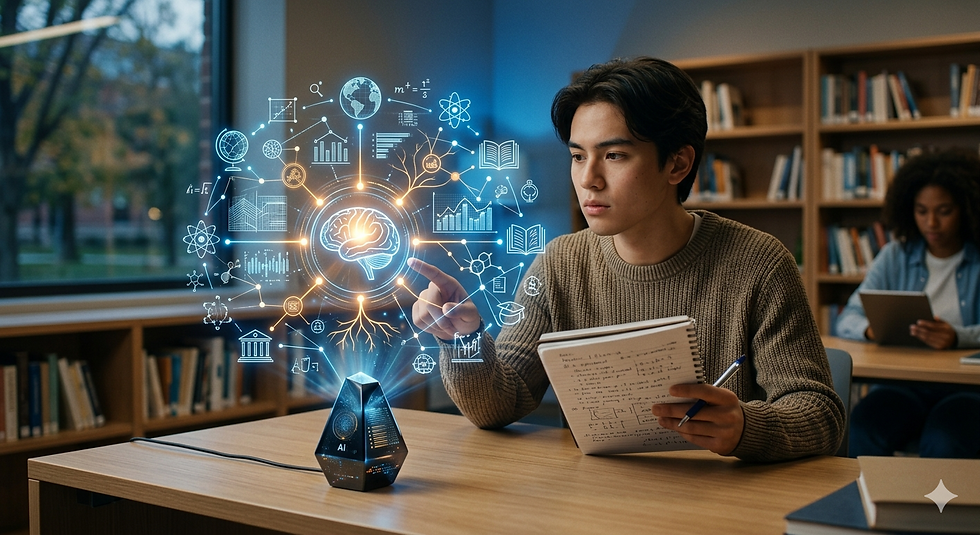
Then the internet arrived. Suddenly, information was everywhere. We went from wondering where to find information to wondering which information to trust. The internet made knowledge abundant. And, AI is now making expertise abundant. Which raises an interesting question: If expertise is available on demand, what should humans learn?
At first glance, AI seems like bad news for universities and for learning in general. If a chatbot can answer hard math questions, write in-depth analysis reports, explain deep concepts, generate endless ideas, and file your taxes, why should anyone spend years learning to do those things themselves? Sometimes the obvious answer isn't the answer.
Learning has never been only about collecting facts. Learning helps us recognize patterns, make judgments, ask better questions, and spot bad answers. Ironically, the people who know the least about a topic are often the least equipped to tell when AI is wrong. And AI is wrong. Confidently wrong.
For generations, education placed a premium on acquiring knowledge. That will remain important. But the best knowledge to acquire will be different. The ability to frame problems, evaluate ideas, think critically, communicate clearly, and exercise judgment will become more valuable. In a world where answers are cheap, good questions become priceless.
Given that framework, it’s obvious that AI will change how we learn. For centuries, students learned in stately buildings from teachers, books, and experience. Soon, every student may have access to a tutor with infinite patience, instant feedback, expansive expertise, and office hours that never close. Learning could become more personalized, conversational, and adaptive than ever before. All in a classroom with a tutor-to-student ratio of 1-to-1. The future of learning may look a lot like the past. Only different.
Oddly enough, the more expertise AI provides, the more human judgment matters. The past belonged to the people who knew the most. The future will belong to those who know what to do with what they know.

By: Scott Sherman
Founding Fellow, Grand Marshall
AI Disclosure: Parts of this blog post were editing with Google Gemini.
Image: Google Gemini

Comments